Posts tagged ‘stress’
Why Don’t Mothers & Daughters Get Along?
A mother reaches out. A daughter pulls away. This quiet dance happens in countless homes. This reflection explores why mother–daughter relationships can feel so strained—and how healing can begin.
Building Emotional Strength: A Guide for Parents Navigating Anxiety With Their Children

Guest blog provided by Gwen Payne.
When it comes to fostering an emotionally healthy home environment, understanding the profound impact that parental anxiety can have on children is crucial. As parents, this is the first step towards nurturing their resilience and emotional strength. Creating a supportive atmosphere where children can navigate their feelings of anxiety confidently is essential. Today, C. Lynn Williams will delve into several effective strategies designed to help parents recognize signs of anxiety in their children, as well as manage their own stress in ways that promote a positive emotional climate for the entire family.
Signs of Anxiety in Your Child
Vigilance is key in identifying anxiety in children, who may exhibit changes in behavior, mood swings, or physical symptoms such as stomach aches or headaches. By paying close attention to how your child acts in different settings, you can catch early signs of distress. It’s important to approach these signs with openness and without judgment, creating a supportive environment for your child to share their feelings.
Encouraging Open Communication
Creating an environment of open communication and trust is pivotal for supporting your child through moments of anxiety. Strive to make your home a place where your child feels safe discussing their fears and concerns. Active listening and validating their feelings convey understanding and respect, encouraging them to express their worries freely and openly.
Reduce Work Stress
If your current job is causing you anxiety, maybe it’s time to explore how boosting your education could expand your career options. Pursuing online educational opportunities – especially focusing on flexible nurse practitioner programs – could be a great way to earn your online FNP degree. This mode of education not only offers flexibility to manage your caregiving responsibilities but also opens doors to various high-demand fields such as nurse education, informatics, nurse administration, and advanced practice nursing. By tailoring your learning journey to your personal and professional needs, you can alleviate work-related stress and position yourself for a fulfilling career in healthcare, all from the comfort of your home.
Help Children With Coping Skills
Teach your child coping mechanisms and problem-solving skills to handle anxiety-inducing situations with confidence. Introducing strategies such as deep breathing, identifying triggers, and simplifying complex tasks can empower your child. Encouraging them to approach challenges with a problem-solving attitude builds resilience and self-assurance, key components of emotional strength.
Assess & Manage Parental Anxiety
Take time to reflect on your personal anxiety levels and how they might affect your parenting style. Recognizing how your responses to stress can impact your child’s emotional health promotes a thoughtful approach to managing emotions. This self-awareness is essential for reducing the transmission of anxiety to your child and promoting a serene and supportive home atmosphere. By engaging in this introspective process, you can cultivate a healthier dynamic and better support your child’s emotional development.
Prioritizing Parental Self-Care
Self-care is fundamental to effectively managing your anxiety and supporting your child emotionally. Regular exercise, mindfulness practices, and dedicating time to activities you enjoy can drastically enhance your emotional well-being. By making self-care a priority, you ensure that you are emotionally available and supportive of your child’s needs.
Seeking Professional Guidance
If you observe persistent signs of distress in your child, seeking help from mental health professionals may be beneficial. Therapy or counseling can provide both you and your child with strategies to manage anxiety and improve emotional well-being. Professional guidance can be invaluable in navigating the complexities of family anxiety dynamics.
Successfully navigating anxiety with your children involves recognizing their signs of distress, managing your own anxiety, and creating a supportive family environment. Key to this process is open communication, teaching effective coping strategies, and leading by example through healthy stress management practices. By adopting these approaches, you lay the foundation for a resilient and emotionally strong family. Your proactive and aware efforts in managing anxiety can profoundly influence your child’s capacity to thrive emotionally, fostering a sense of confidence and resilience in facing life’s challenges.
C. Lynn Williams is an author, speaker, educator, and parenting coach. Questions? Please email clynn@clynnwilliams.com.
The Importance of Self-Care During a Pandemic…and Beyond
Guest blog by Kristen Fescoe, Resility Health
As we find ourselves living an uncertain and challenging time, self-care has never been so important. Before the outbreak of COVID-19, self-care was something many of us pushed to the back burner. There would always be time for it tomorrow. For most, tomorrow never came. Now, as we are being asked to slow down and change the way we live, it seems that tomorrow may be today.
There are plenty of benefits to creating a self-care routine. Feeling better about yourself, living a more present life and focusing on your own goals are all important examples. Self-care is one of the best ways to stave off the physical and emotional impact of stress and worry.
When you experience a stressor in your life, big or small, your brain and body react with the fight or flight reflex. Your brain releases chemical messengers into your bloodstream. Your pulse and blood pressure quicken. While this is great if there is a real threat to you, it can be damaging to your mental and physical health if you experience it for an extended period of time.
This is where self-care plays an important role. By taking a little time every day to focus on your emotional well-being, you can start to change the way you react to stress. No matter how badly we would like to, it’s really hard to eliminate stress from our lives. Especially now, during this difficult time. Stress is a constant in most of our lives.
What we can change is the way we react to stress.
Daily self-care is a mechanism to do this. Let’s say you decide that 3 times a day you will perform a self-check-in. So each morning, afternoon and evening you will spend 2-3 minutes checking in with yourself and thinking about how you feel both physically and emotionally.
During these few minutes, you will think about any pain or discomfort you have, anything that has been silently nagging at your attention, anything that might be impacting your mood. By just taking notice of it you actually can start to change how you react to it. If you were to do this every day for 3-4 weeks you will quickly find that you become much more aware of when your body is reacting to stress and you will even start to reduce your body’s automatic stress response.
There has never been a better time to begin a self-care regimen. Stress is at an all-time high. People are dealing with everything from loss of loved ones to extreme loneliness and even the exacerbation of psychological disorders. Life isn’t easy. Since you can’t do anything to remove stress from your life, there is something you can do to change its impact on you.
C. Lynn Williams, #MsParentguru
Parent Coach, Author & Speaker
Help for Stressed Out Working Moms
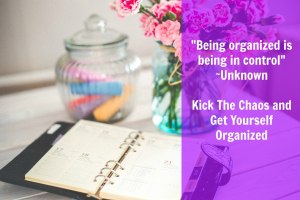 When I was growing up, my mom and grandmother always told me that cleanliness is next to godliness. Right along with that saying, my mom stressed being organized. She felt that being organized helped her manage her hectic schedule of being a wife, mother and working.
As a wife, mother and entrepreneur, I realize how important it is to be organized not only in my home, but in my business and in my head. I’ve talked about it with my clients and often hear that they feel that staying organized is impossible especially at home because either the kids have their stuff everywhere or your partner does – or both are culprits.
Why not start now? 2017 is a great year to become more organized. As an entrepreneur, wife and mother, there is always something I need or should be doing with my time. On Tuesday, I shared 4 key steps to getting organized during my Getting Organized webinar. This webinar is a part of my Kick the Chaos strategy to help working women and mothers like you, get a better handle on their work-life balance.
If you missed this free webinar, no worries, I’ve posted the replay until Wednesday, Feb 1st
Click here to watch the replay: http://bit.ly/2k5TxW7
Don’t miss it! Kick the chaos out of your life!
When I coach my clients about finding their superwoman, I encourage them to determine what is most important in each area of their life: work, family and relationships. Once they’ve sorted out what’s most important, we go to work determining how to remove guilt and those feelings of being overwhelmed by what our family members and work associates think about the decisions we’ve made. You can have a wonderful relationship with your partner and your children as well as a promising career. If making this happen is really hard for you, text CONSULT to 708.501.7060 for a complimentary discovery session with me.
C. Lynn Williams
Author & Founder of Finding Superwoman™
http://www.clynnwilliams.com
The Good..The Bad..The Ugly
Even though my kids are adults, I’m still an involved mom because I talk with one or all of them daily about the good, the bad, and the ugly in their lives. It’s sort of like being on call. I find that I constantly manage my life and work (marriage too) around theirs. Moms who are reading this know what I’m talking about if this happens to you: You have a perfect plan to complete the chapter for your next book and receive a call from your daughter who needs to talk. Do you tell her – “I’m sorry I have a deadline for this chapter and I’ll have to talk with you later”? Or, do you put on your mother hat, and listen to her talk out the 20th problem that is ruining her life?
Whatever you decide, stress sets in when you allow too many of your children’s problems and concerns to hijack your day, week, or month. It’s difficult to say no to our kids, because we are so used to doing for them. However, since they are used to being cared for by us, it can become a challenge letting them grow into the wonderful, self-sufficient adults that we know they can be. Statistics show that 25% of parents are using their retirement to pay rent or groceries for their millennial children (21 years or older).
For Superwomen like me, here are some ideas on how to achieve less stress when it comes to your children:
- Take a moment to think about your answer and what you are committing to before you commit. For example if your son asks you to pay his car insurance (“Just for this month Mom”). Think about what it does to your budget. If you can afford it. What lessons does it teach him?
- Listen without advising the next time your daughter asks you what should she do about the guy that she’s been dating for five years. (You’re not crazy about him anyway, so keeping your opinions to yourself will be very challenging.)
- Let the call go to voicemail when your child calls you for the 5th time today because she can’t figure something out. I know this is really a tough one because who else will talk her through if not you. Give her some time to build her mental muscle (she is a superwoman in the making) and call her later. You will be surprised to see how she worked out her problem and matured a little more in the process.
Interested in learning more about your family’s dynamics? Contact me – Ms. Parent Guru to receive information about my inspiring parenting programs for Aging Parents, Mothers and Daughters, Mothers and their Sons or Fathers and Daughters.
Click Here to receive my newsletter and notices of my future events.
C. Lynn Williams, #MsParentguru
Family Dynamics Strategist, Author & Speaker
 Staying Sane While Raising Your Teens
Blogpost Comments