How to Get Kids to Listen Without Yelling or Repeating Yourself 10 Times
April 30, 2026 at 10:48 pm Leave a comment
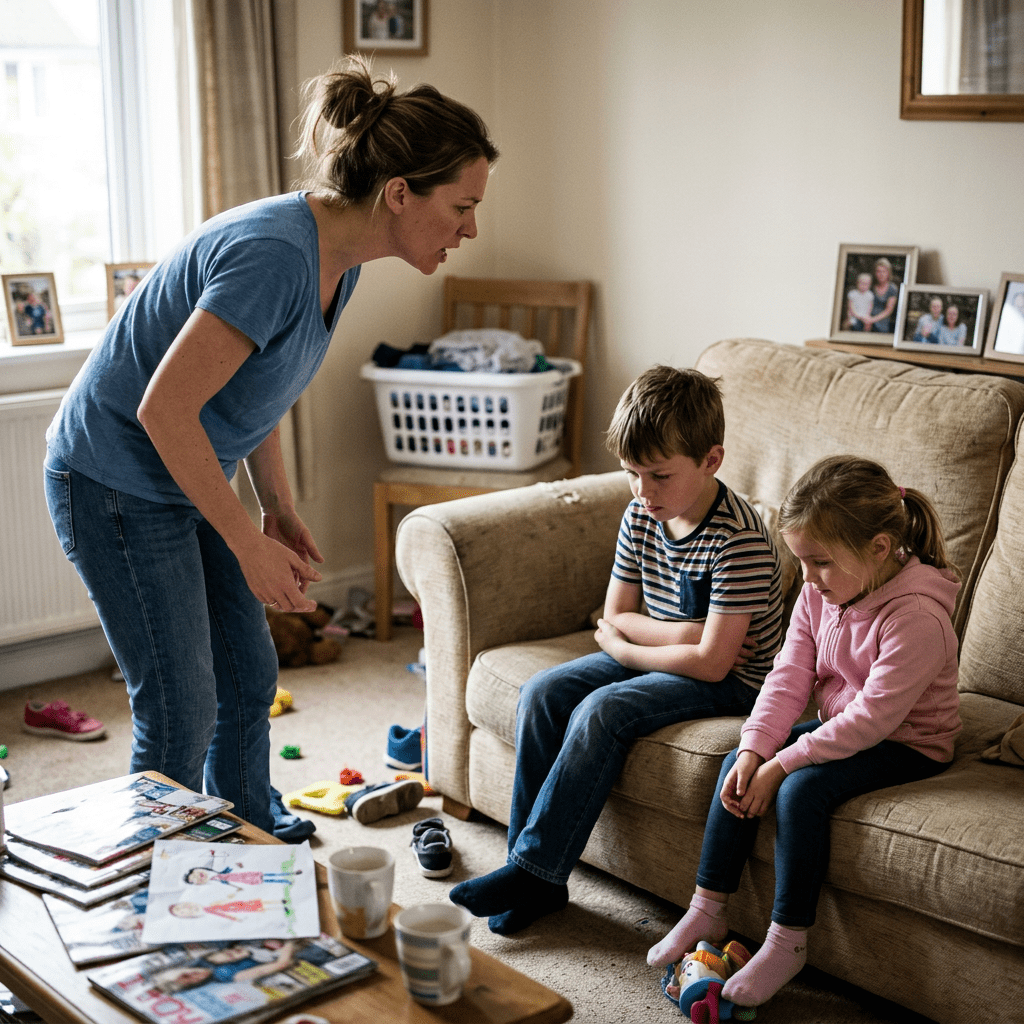
You said it once.
Then twice.
Then five more times.
Now your voice is louder, your patience is thinner, and somehow your child is still standing there like they didn’t hear a word you said.
“Put your shoes on.”
“Clean your room.”
“Turn off the TV.”
“Start your homework.”
By the time you’ve repeated yourself for the tenth time, frustration has taken over—and yelling feels like the only thing left.
But here’s the truth: yelling may get attention, but it rarely creates lasting cooperation.
If you’re tired of repeating yourself and ready for a calmer way to lead your home, it starts with one important shift:
Your child doesn’t always need louder. They need clearer—and a way to actually tune in.
Why Kids Don’t Listen
Before labeling it as defiance or disrespect, it helps to understand what’s really happening.
Kids are often:
- distracted
- overstimulated
- transitioning between activities
- emotionally “still at school” even when they’re home
Especially after school or during screen time, their brains are not always ready to shift instantly into listening mode.
And when we respond by repeating ourselves over and over, we accidentally teach them something:
“I don’t have to respond the first time. Mom will keep going.”
That’s how the cycle starts.
The Repeat-Yell Cycle
It usually looks like this:
You ask.
No response.
You repeat.
Still nothing.
You repeat louder.
Now frustration builds.
Now you’re yelling.
Now everyone is stressed.
The goal isn’t perfection—it’s interruption.
We want to break the cycle before it escalates.
Step 1: Interrupt the Noise Before You Speak
Here’s where many parents miss the opportunity: we try to talk over chaos instead of first getting attention.
One simple tool can change everything:
👏 “Clap Once If You Hear Me”
This is a powerful attention reset—especially when kids are distracted, loud, or scattered.
Try it like this:
“Clap once if you hear me.”
(wait for response)
“Clap twice if you’re ready to listen.”
Why this works:
- It interrupts without yelling
- It gives kids something to do, not just hear
- It resets the room quickly
- It turns attention into participation
Instead of competing with noise, you’re redirecting it.
This works especially well:
- after school
- during cleanup time
- before leaving the house
- during group chaos
Think of it as a soft reset button for the home.
Step 2: Get Their Attention First (Always)
Once you have the reset, don’t skip this step.
Get connection before correction.
Use:
- their name
- eye contact
- proximity (move closer if needed)
Instead of:
“Jayden! Put your shoes on!”
Try:
“Jayden, look at me for a second. Shoes on—we’re leaving in five minutes.”
Step 3: Give ONE Clear Instruction
Most kids don’t fail at listening—they fail at decoding long instructions.
Keep it simple.
Instead of:
“Go upstairs, clean your room, get your backpack, and get ready for tomorrow.”
Try:
“Clean your room first. Then we’ll do the next step.”
One instruction = more follow-through.
Step 4: Ask for a Repeat-Back
This is where clarity becomes accountability.
Ask:
“Tell me what you’re going to do.”
This helps:
- confirm understanding
- reduce “I didn’t hear you”
- shift responsibility back to the child
Simple. Powerful. Underused.
Step 5: Follow Through Calmly
This is where consistency matters more than volume.
Not yelling.
Not repeating 10 times.
Just calm follow-through.
Examples:
- “Screens are off until homework is done.”
- “We’re leaving when shoes are on.”
- “We try again when you’re ready to listen.”
Kids trust what we consistently enforce—not what we repeatedly say.
What to Stop Doing
If you want kids to listen more, start reducing:
🚫 Yelling from another room
If they can’t see you, they’re not fully receiving you.
🚫 Long explanations in the moment
Too many words = less processing.
🚫 Repeating without action
Every repeated warning without follow-through teaches them to wait you out.
What Many of Us Experienced Growing Up (and Still Remember)
Some of us grew up watching a different kind of parenting.
Not louder parenting.
Not chaotic parenting.
But clear parenting.
You might remember a mother, father, aunt, or caregiver who didn’t yell to be heard.
They didn’t repeat themselves ten times.
They didn’t escalate into frustration.
They simply had a way of speaking that made you stop and listen the first time.
Not because they were intimidating—but because they were intentional.
Their tone carried clarity.
Their words carried expectation.
Their presence carried consistency.
And somehow, you just… responded.
That wasn’t magic.
That was skill.
They understood something many of us are relearning now:
Children don’t just respond to volume—they respond to clarity, timing, and connection.
And the good news is, that same skill can be learned and used today, even in the middle of busy, modern, overstimulated family life.
When we remember what calm, clear parenting looks like, the shift becomes easier to see in real life.
A Real-Life Shift
Before:
“Turn that game off.”
“Turn it off.”
“I said turn it off!”
“Why do I always have to repeat myself?!”
After:
“Clap once if you hear me.”
(wait for response)
“Good. Game off in five minutes. Homework starts next.”
“Tell me what’s happening in five minutes.”
“Game off. Homework starts.”
Less chaos.
More clarity.
More cooperation.
Final Thought
You don’t need to become louder to be heard.
You don’t need to repeat yourself until you’re exhausted.
You need simple systems that help your child shift attention, understand expectations, and respond the first time.
Sometimes the most powerful parenting change isn’t saying more.
It’s creating a way for them to actually hear you the first time.
Ready for More Support?
If you’re tired of parenting from exhaustion and ready for practical tools that actually work, my workshops help moms reset routines, reduce overwhelm, and build calmer homes without yelling, nagging, or burnout.
Because peace in your home shouldn’t feel like a constant struggle—it should feel like a system you can rely on.
C. Lynn Williams, #MsParentGuru
Author & Parent Coach
Helping parents care for themselves while raising strong, confident kids.
📩 clynn@clynnwilliams.com
🌐 http://www.clynnwilliams.com
📱 Follow me: @MsParentguru
Entry filed under: #FindingSuperwoman, #imnotok, #lessonslearned, #mom, #MsParentguru, #womenwholead, adolescents, behavioral adjustment, boundary setting, communications, corporate moms, entrepreneur moms, feelings, Finding SuperWoman, Parenting. Tags: family, life, Mental health, parenting, writing.


Trackback this post | Subscribe to the comments via RSS Feed